What is teeth whitening?
Teeth whitening can be a very effective way of lightening the natural colour of your teeth without removing any of the tooth surface. It is simple, safe and long lasting.
Is teeth whitening safe?
If carried out by a trained dental professional teeth whitening is perfectly safe. Based on their knowledge of your oral health your dentist will discuss with you the options available, decide if whitening is appropriate for you and develop an overall treatment plan that gives you the desired result.
How does it work?
What should I expect?
You may experience some sensitivity for a short time during your treatment but this is normal and will soon fade away after completion
Can anyone provide teeth whitening?
No. It is illegal for anyone other than dentists or their teams to carry out teeth whitening. Anyone else offering teeth whitening (beauticians, hairdressers and salon staff) won’t have the right training and knowledge, could permanently damage your teeth and gums and can’t help you when something goes wrong.
What about other options to lighten teeth?
Whitening won’t remove the surface of your teeth or change their shape. It’s often a better option than alternatives, such as veneers, because it doesn’t involve permanently altering the tooth’s structure and is easier to look after.
Which product is right for me?
Your dentist is trained to know what whitening products will be safe for your teeth and gums. Products provided by non-dentist often do not have enough safety data and evidence to support their use; this can result in burned gums and/or blistered lips or even more serious consequences. Using products that are not appropriate for you will produce poor results
What about over the counter kits?
The products you can buy online or from high street shops often fail to declare the precise chemicals used so it’s very difficult to assess their safety. Due to this they should not be considered safe. These products won’t produce the same good results you can expect by visiting your dentist.
When should I need a veneer?
Veneers can improve the colour, shape and position of your teeth. A precise shade of porcelain can be chosen to give the right colour to improve a single discoloured or stained tooth. A veneer can make a chipped tooth look intact again. The porcelain covers the whole of the front of the tooth with a thicker section replacing the broken part. Veneers can also be used to close small gaps, when orthodontics (braces) are not suitable. If one tooth is out of position, a veneer can sometimes be fitted to bring it into line with the others.
What are the advantages of veneers?
Veneers make teeth look natural and healthy. As they are very thin and are held in place by a special strong bond, very little preparation of the tooth is needed.
How are the teeth prepared for a veneer?
Some of the shiny outer enamel surface of the tooth may be removed, to make sure that the veneer can be bonded permanently in place later. The amount of enamel removed is tiny and will be the same thickness as the veneer. A local anaesthetic (injection) may be used to make sure that there is no discomfort, but often this is not necessary. Once the tooth has been prepared, the dentist will take an impression (mould). This will be given to the dental technician, along with other information needed to make the veneer. The colour of the surrounding teeth is matched on a shade guide to make sure that the veneer will look entirely natural.
How long will it take?
A veneer takes at least two visits: the first to prepare the tooth and to match the shade, and the second to fit it. Before bonding it in place, your dentist will show you the veneer on your tooth to make sure you are happy with it. Bonding a veneer in place is done with a special adhesive, which holds it firmly on the tooth.
How long will a veneer last?
Veneers look at their best for 10-15 years with good maintenance from you.
These are a type of cosmetic crown which are made purely from ceramic and no other material. This is in contrast to other types of crowns such as the porcelain fused to metal variety and gold crowns.
The defining feature of these crowns is that they are made from a translucent material which is attractive to look at and blends in well with the rest of your teeth.
There are two types of ceramic crown: E-max & Zirconia.
Advantages of All Ceramic Crowns
These crowns are ideally suited to people who have minimal space within their mouth for a crown or prefer something which has a natural appearance.
They are made from a thinner material which results in a lighter crown. Plus the material used is ‘bio-compatible’ which is kind to natural gum tissue and enables it to grow back alongside the crown.
There is no risk of an allergic reaction or sensitivity to hot or cold foods.
Disadvantages of All Ceramic Crowns
Whilst there are advantages of these crowns it is only fair to highlight the disadvantages as well.
There appears to be a trade off between aesthetics and strength: this type of crown is lifelike and pleasant to look at but there is a downside. It is less durable than other types of crowns which mean it is more prone to cracking or breaking.
Plus the refinement needed to produce these crowns makes them more difficult to fit. They require a high degree of expertise on the part of the dentist which increases their cost.
How are All Ceramic Crowns fitted?
The procedure is the same as for any fitting of a crown. The dentist will clean and reshape the tooth to be treated as a form of preparation. The tooth is tapered so that it will allow the crown to fit snugly over the top.
An impression is then taken of your teeth with dental putty. This mould is sent to a dental laboratory where it will be used to fabricate a new crown.
It takes around 1 to 2 weeks for this to happen so you will be fitted with a temporary crown in the meantime.
Once it is ready you will asked to return to the surgery where you will be fitted with your new crown. This involves the dentist roughing the surface of the affected tooth with etching acid which will enable the crown to adhere to the tooth.
This will be checked by your dentist. Once both of you are satisfied with the fitting then it will be fixed firmly in place with dental cement.
These are a popular alternative to the silver amalgam filling and are preferred for their superior function and appearance. Plus there are people who have concerns about the safety of amalgam fillings in regard to the inclusion of mercury.
For these people, the tooth coloured filling is an option.
It is inserted into your tooth (cavity) during a single visit to your dentist. This immediate or direct form of treatment is ideal for people with busy lives who have teeth with a small amount of decay.
There is a choice of materials for fillings which include ceramic, silver amalgam and composite resin. Ceramic and composite fillings have a white appearance which means that they will closely match the rest of your teeth.
This is why they are preferred for cosmetic reasons.
Three Considerations
The procedure has three issues to deal with:
Shrinking of the filling
Wear and tear of the filling
Coverage of the filling
There is the risk of a filling starting to shrink around the edges which then leaves a gap between the material and the tooth. The problem with this is that it enables bacteria to access that space which can lead to an infection.
So the filling has to be applied in stages to ensure that it covers the cavity and is both strong and durable. Polishing and/or glazing the filling will reduce the risk of wear and tear, e.g. cracking or splitting.
The filling is bulked out with different layers so that it protects the internal structure of the tooth and prevents further decay. The aim is to strengthen the tooth and maintain its function.
The procedure for a filling involves you being given a local anaesthetic beforehand. This will help to numb the area to be treated.
The affected tooth will be restored (built up) and/or decay will be removed before the filling is placed. It is then cleaned and the cavity plugged with the filling material which then bonds with the tooth.
At Mercian House Dental Practice we use the highly aesthetic Venus Pearl composite.
How Invisalign Works…
Invisalign® takes a modern approach to straightening teeth, using a custom-made series of aligners created for you and only you. These aligner trays are made of smooth, comfortable and virtually invisible plastic that you wear over your teeth.
Wearing the aligners will gradually and gently shift your teeth into place, based on the exact movements your dentist plans out for you. There are no metal brackets to attach and no wires to tighten.
You just pop in a new set of aligners approximately every week, until your treatment is complete.
You’ll achieve a great smile with little interference in your daily life. The best part about the whole process is that most people won’t even know you’re straightening your teeth.
Why Invisalign?
Sure, there are other options out there for straightening your teeth, but none offers the level of comfort, convenience and confidence that you’ll find with Invisalign®. And no matter what stage you’re at in life, you’ll appreciate how our cutting-edge approach to treatment has minimal interference in how you live, but has a significant positive impact on how you look and feel about yourself.
What are the benefits of Invisalign?
Invisalign aligners are nearly invisible. No one may even notice that you’re wearing these virtually invisible aligners, making Invisalign a seamless fit with your lifestyle and day-to-day interactions with others.
Invisalign aligners are removable giving you the flexibility to eat and drink what you want during treatment by simply removing the aligners. And you can also remove the aligners to brush and floss as you normally would for fresh breath and to maintain good oral hygiene.
Unlike traditional fixed braces, there are no metal brackets or wires. This means that in most cases less time is spent in your Invisalign Provider’s practice for adjustments.
And finally, Invisalign allows you to view your virtual results and treatment plan before you even begin treatment so you can see how your teeth are expected to look when your treatment is complete
How long does the Invisalign treatment take?
The total duration of treatment depends on the complexity of the treatment and is generally comparable to that of traditional braces. Typically treatment can last between 9 and 18 months. During your consultation, your Invisalign Provider can provide you with more detailed information.
Can Invisalign close gaps?
Yes. Spaces between teeth are generally easy to close with Invisalign. Consult an Invisalign Provider to determine whether Invisalign is suitable for you.
Are there restrictions on what I can eat while in treatment?
No. Unlike traditional wires and brackets, you can eat whatever you like while in treatment because you remove your aligners to eat and drink. Thus, there is no need to restrict consuming any of your favourite foods and snacks. Also, it is important that you brush and floss your teeth after each meal and prior to re-inserting your aligners to maintain proper hygiene.
How often must the aligners be worn?
Aligners should be worn all the time during treatment, except when eating, brushing or flossing teeth.
Will the aligners affect speech?
The vast majority of patients report no effect on speech. However, as with traditional orthodontic appliances, there is an initial adjustment period associated with having something new in the mouth.
Special Offer
All patients who undergo Invisalign Treatment are entitled to 50% off Teeth Whitening.
Do you offer any finance or payment plans?
Yes we do. We offer interest free payment plans to help spread the cost of the treatment.
Do you offer any packages?
Yes, we include complementary digital scans, 3D smile visualisations, free retainers and even teeth whitening.
General Dentistry
- Routine examinations
- Hygienist services
- Dental restorations
- Root canal treatment
- Crowns & Bridges
- Dentures
- Extractions
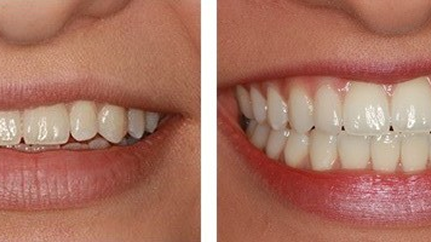
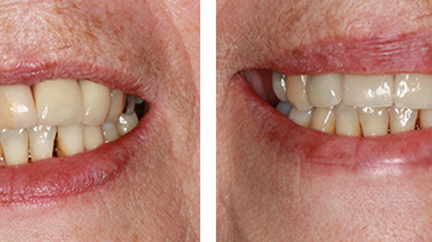
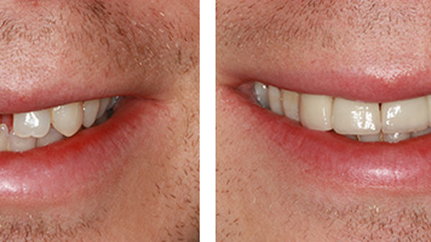
Please view our Gallery to see before and after images of patients who have whitened their teeth as part of their overall treatment.